Introduction: The Deceptive Rise of a Global Misnomer
To call something a stablecoin is to embed a promise into the name. It suggests permanence, reliability, and the absence of monetary turbulence. But as with many euphemisms in modern finance, this term conceals more than it reveals. Stablecoins are not inherently stable; they are merely pegs to existing fiat currencies whose real purchasing power is declining year after year. Currently, roughly 99 percent of stablecoins are tied to the U.S. dollar [1][2], and to the extent that they mirror the U.S. dollar, they are decaying at the same rate as the U.S. dollar itself.
The same logic extends beyond the U.S. dollar as other jurisdictions—including Canada, Japan, the European Union, and Hong Kong—introduce or plan their own stablecoins. A stablecoin pegged to the Canadian dollar, the yen, or the euro inherits the same structural weakness as the currency it mirrors. If the underlying fiat unit is steadily losing purchasing power, the digital token tied to it cannot be meaningfully more “stable.” At best, these new instruments may offer slightly more transactional convenience; at worst, they create the illusion of monetary soundness while quietly encoding inflation, and introducing the risks of increased surveillance, censorship, and monetary colonialism, all cleverly packaged in a new digital wrapper.
This illusion of stability becomes unmistakable once the underlying monetary record is examined. Over the past two decades, for instance, the U.S. consumer price index reveals a loss of more than 40 percent in real purchasing power [3]. This is not an anomaly or a uniquely American failure; it reflects a broader global pattern in which all the world’s fiat currencies have experienced sustained erosion in real value, regardless of how modern, regulated, or technologically advanced their monetary systems may appear.
In the Eurozone, the euro has lost roughly one-third of its purchasing power since its introduction in 1999 [4], driven by steady inflation punctuated by sharp surges during financial crises and pandemic-era monetary expansion. The British pound has fared even worse. Using official UK CPI data, consumer prices are up by roughly 115% since 2000—meaning the pound’s domestic purchasing power has fallen by about half over the last quarter-century [5][6]. In Canada, cumulative inflation since 2000 has reduced the Canadian dollar’s purchasing power by approximately 40 percent, steadily eroding real wages and household savings despite periods of apparent price stability [7].
Japan’s yen illustrates a different kind of monetary failure. For much of the post-1990 period, Japan experienced relatively low domestic inflation. Yet the yen’s value against other major currencies has steadily weakened, falling to a 34-year low against the U.S. dollar in 2024 and remaining under pressure into late 2025, prompting repeated warnings of possible government intervention if currency movements became “excessive” [8][9]. For households and import-dependent economies, this currency weakness acts like an inflation shock: energy, food, and industrial inputs become more expensive even when domestic consumer prices appear relatively stable [10].
This erosion of fiat currency purchasing power around the world is not a policy failure—it is actually policy objective. Most central banks explicitly target annual inflation rates of approximately 2 percent, with some tolerating or endorsing levels closer to 3 percent during “transitional” periods [11][12]. Compounded over time, these seemingly modest targets translate into profound monetary decay: at 2 percent inflation, a currency loses roughly 45 percent of its purchasing power over forty years; at 3 percent, the loss approaches 70 percent [13]. In other words, governments and central banks around the world are not merely tolerating inflation—they are formally committing to a system in which money is designed to lose value over time. What is presented as “price stability” is, in practice, the managed and continuous erosion of savings, wages, and long-term economic certainty.
These facts illustrate an unmistakable truth: the dilution of fiat purchasing power is not a future threat—it is an ongoing, compounding reality baked into the architecture of modern monetary systems. Inflation, deficit spending, and monetary expansion cumulatively degrade the real value of these currencies year after year. Stablecoins, which merely peg themselves to these currencies, inherit their structural weakness. Stablecoins are not digital islands of stability; they are tethered to melting ice cubes, losing purchasing power at precisely the same rate as the fiat currencies they shadow.
In this light, the rhetoric of “stability” surrounding stablecoins is not only misleading but actively obscures the deeper truth: they digitize the fragility of the fiat world rather than transcend it. The marginal improvement in convenience that they might provide is greatly overshadowed by their real costs to the public who are being lulled into accepting them as “innovation.”
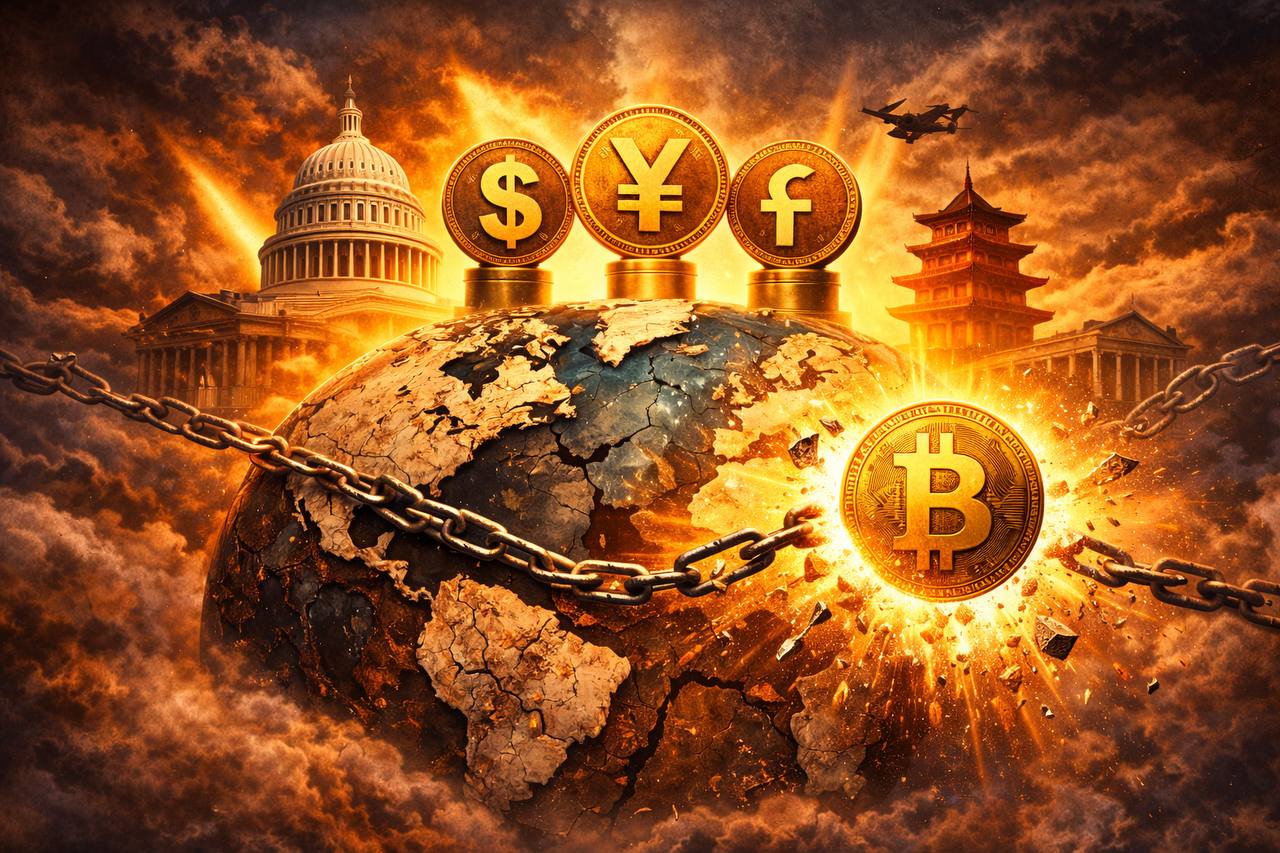
And beyond this economic decay lies a more profound, sinister geopolitical danger: stablecoins do not merely inherit the debasement of their underlying fiat currencies—they also inherit and amplify the systems of monetary and political colonialism those currencies sustain. Whether through the U.S. dollar, the Chinese yuan, the CFA franc, or other hegemonic monetary regimes, stablecoins risk re-entrenching patterns of dependence and external control at precisely the moment when communities and nations around the world are seeking pathways to liberation and self-determination.
U.S. Monetary Policy and the Political Economy of Fiat-Backed Stablecoins
The global proliferation of U.S. dollar-denominated stablecoins is no accident of market innovation. It represents a new chapter in a longstanding geopolitical strategy. While stablecoins appear to be neutral financial instruments, their architecture and incentive structures reveal two unmistakable objectives of a refreshed, rebranded U.S. monetary policy.
For decades, the United States relied on foreign governments—most notably China, Japan, Russia, and oil-exporting nations—to purchase U.S. Treasury debt. That era is waning. China has steadily reduced its Treasury holdings for over a decade [14], Russia exited the market almost entirely before 2022 [15], and even Japan, once the most reliable anchor of U.S. debt markets, has begun to rebalance its portfolio to defend its own currency.
The U.S. response to these shifting tides has been subtle but decisive: replace state buyers with global retail and corporate buyers. Stablecoins do exactly this. When a user in Kenya, Brazil, Turkey, or the Philippines acquires USDT or USDC, for example, their dollars are not sitting idle in a vault; they are almost immediately allocated to short-term U.S. government debt, generating yield for the stablecoin issuer and supplying liquidity to the U.S. Treasury [16].
This mechanism channels global savings into financing the United States—at precisely the moment when traditional creditors like China, Russia, and Japan have stepped back.
Stablecoins also extend U.S. monetary reach far beyond the boundaries of traditional banking rails. In many ways, they replicate—and radically accelerate—the logic of the Eurodollar system, which emerged in the 1950s as offshore U.S. dollar deposits held in European and later global banks outside the jurisdiction of the Federal Reserve [17]. The Eurodollar market became a central pillar of global finance throughout the second half of the twentieth century, allowing foreign banks to create, lend, and settle U.S. dollar-denominated claims completely independently of U.S. domestic banking regulation [18]. This offshore dollar liquidity enabled the U.S. dollar to dominate global trade and financial markets even when core parts of the system operated well beyond U.S. territorial or regulatory control.
Stablecoins function as the digital successor to this architecture. Instead of offshore banks issuing U.S. dollar-denominated liabilities, private stablecoin issuers now create synthetic U.S. dollars backed—at least in principle—by U.S. financial assets such as Treasuries and cash equivalents [19]. But unlike Eurodollars, which grew primarily through institutional banking channels, stablecoins spread with the speed, accessibility, and virality of internet-native protocols. They allow anyone with a smartphone to hold, transfer, and save in U.S. dollar-denominated value outside of the traditional correspondent banking network, bypassing capital controls, slow legacy payment rails, and political bottlenecks that historically constrained the reach of the dollar system [20]. In this sense, U.S. dollar stablecoins do not replace the Eurodollar system; they digitize and drastically accelerate it, extending the global reach of U.S. monetary power to a scale and speed previously unimaginable.
This dynamic fits neatly within economist Brent Johnson’s “Dollar Milkshake Theory,” which argues that global demand for U.S. dollars intensifies during geopolitical instability, drawing capital into the U.S. system and draining weaker currencies in the process [21]. Stablecoins represent the purest form of this dynamic: they allow billions of people to hold and transact in U.S. dollars outside the Federal Reserve System, reinforcing global U.S. dollar primacy.
This strategy is now being formalized. The proposed GENIUS Act—formally titled the Guaranteeing Essential Non-interest-bearing Instruments and Unified Supervision Act—is legislation currently under review in the United States Congress that seeks to create a comprehensive federal framework for the issuance, regulation, and oversight of U.S.-dollar stablecoins [22]. The bill would establish a licensing regime for stablecoin issuers, require reserves to be held in highly liquid U.S. government securities, and situate stablecoin regulation primarily within the Treasury Department and Federal Reserve System.
The GENIUS Act’s architecture seeks to enshrine a major shift: the U.S. government is moving to explicitly integrate stablecoins into its broader monetary and geopolitical toolkit, ensuring that U.S. dollar-backed digital assets remain tightly aligned with American regulatory standards and foreign-policy interests [23]. The message is clear: stablecoins are becoming a pillar of American financial statecraft, a digital extension of U.S. monetary power designed to reinforce the primacy of the dollar in a rapidly evolving multipolar world.
But with that expansion comes significant risks for the rest of the world: deeper entrenchment of dollar dependency, heightened exposure to U.S. sanctions, and the reintroduction of colonial-style monetary hierarchies in digital form.
Monetary Neo-Colonialism Beyond the United States: China, Russia, France, and the New Financial Empires
The proliferation of U.S. dollar-denominated stablecoins is not the only monetary force impacting the so-called global south. Communities and governments across Africa, Latin America, Southeast Asia, and Eastern Europe are increasingly caught between multiple competing monetary and geopolitical blocs, each seeking to extend influence through financial instruments framed as development, stability, or cooperation. The risk is not merely dependency on the U.S. dollar—it is the proliferation of systems of financial neo-colonialism led by countries such as China, Russia, and France, each extending monetary control through parallel mechanisms of economic leverage.
China’s Belt and Road Initiative (BRI) illustrates this logic with unprecedented scale. Launched in 2013, the initiative has financed over one trillion dollars in infrastructure investments across more than 140 countries, often through opaque or bilateral loan agreements that leave debtor nations vulnerable to political and economic pressure [24]. In high-profile cases like Sri Lanka’s 99-year lease of Hambantota Port after debt distress, scholars argue that these arrangements function as “debt-trap diplomacy,” binding governments to Chinese strategic objectives rather than to the needs of their own populations [25].
Russia, though less dominant financially, leverages a similar pattern of monetary and economic influence. Through energy-backed debt, bilateral currency arrangements, and security-linked financial agreements in regions such as Eastern Europe, Central Asia, and parts of Africa, Russia ties fragile states to its geopolitical orbit [26]. In several African nations—among them Mali, Sudan, and the Central African Republic—Russian economic involvement is intertwined with security assistance, generating dependencies that reach far beyond the financial sphere [27].
One of the most enduring and structurally restrictive systems of monetary neo-colonialism is the CFA franc, used by 14 West and Central African countries. Established in 1945 and still linked to French monetary oversight, the CFA system requires member countries to deposit a significant portion of their foreign exchange reserves with the French Treasury, maintaining a fixed exchange rate with first the French franc and now the euro [28]. This arrangement constrains national monetary policy, limits fiscal autonomy, suppresses industrial policy, and ultimately subjects African economies to the political and economic priorities of France—long after the formal end of colonial rule by force [29]. Movements led by African economists, civil-society groups, and political leaders increasingly refer to the CFA franc zone as a “colonial relic” that perpetuates dependency, capital flight, and structural underdevelopment.
Beyond legacy arrangements like the CFA franc and individual nation-state initiatives like “Belt and Road,” contemporary forms of monetary neo-colonialism beyond the U.S. dollar are also increasingly being expressed through geopolitical coordination among several countries rather than unilateral action. Nowhere is this more evident than in ongoing discussions among BRICS nations regarding alternatives to U.S. dollar-centric trade, settlement, and reserve systems.
Since 2023, media narratives have periodically suggested that BRICS is preparing a gold-backed currency to rival the U.S. dollar. While this is yet to be confirmed in practice beyond a small pilot project initiative, what is clearly documented in official BRICS communiqués is that BRICS nations are making a concerted effort to expand settlement in local currencies, to strengthen cross-border payment and messaging infrastructure, and to reduce single-point dependence on Western financial rails [30][31].
Even without a new unified BRICS currency, the trajectory is unmistakable: major states outside of the U.S. are constructing parallel monetary rails that allow them to intermediate trade, liquidity, and reserves on their own terms. In this environment, stablecoins risk becoming the retail-facing or consumer-level wrappers for competing state-aligned monetary blocs—extending the logic of monetary influence downward rather than dismantling it. For countries of the global south, dependence on any external monetary regime—whether the U.S. dollar, the Chinese yuan, the Russian ruble, the CFA franc, a BRICS currency, or other—exposes countries and communities to the threat of increased political coercion, capital controls, confiscation, and involuntary regime alignment.
Bitcoin Presents a Sovereign Alternative
In this landscape of evolving neocolonialism, Bitcoin provides an escape hatch for individuals, communities, municipalities, organizations, and nations. Bitcoin remains the only liquid, globally accessible monetary network that is not structurally aligned with any country, regional bloc, or corporation.
Bitcoin offers a radically different alternative. As a non-state, censorship-resistant, fixed-supply monetary network, it enables individuals, communities, and nations to escape the gravitational pull of competing systems of monetary control described above. Bitcoin cannot be weaponized, seized, or debased; it cannot be used to impose policy conditionalities or extract long-term concessions. Bitcoin is not just a financial tool but a foundation for post-colonial agency—a way to reclaim autonomy in an international system designed to advantage empires over emerging economies and communities [32]. In this sense, Bitcoin does not merely counter U.S., Chinese, Russian, French, or other nation-state financial dominance; it challenges all architectures of monetary imperialism.
Bitcoin’s promise for the global south is therefore not only monetary but civilizational. It offers a way out of the competing gravitational pulls of great-power ambitions. Rather than forcing communities to choose between Washington’s dollar system, Beijing’s yuan diplomacy, Moscow’s strategic debt arrangements, Paris’s CFA franc regime, or BRICS’s regional bloc control, Bitcoin represents a global monetary commons—a system that lies outside the reach of geopolitical empires and beyond the historical patterns of coercion embedded in traditional currency hierarchies [33].
Individuals, households, and communities adopting and using Bitcoin today are not making a geopolitical allegiance; they are making a civilizational choice. They are choosing self-determination over subordination, resilience over dependency, and genuine sovereignty over the remnants of both old and new colonial orders. Unlike U.S. stablecoins, Bitcoin is not someone else’s liability. It has no issuer, no custodian, and no political center of gravity that can be pressured, sanctioned, or co-opted. It is secured by a decentralized global network that has maintained over 99.99 percent uptime since its launch in 2009—operational 24 hours a day, seven days a week, 365 days a year, without the permission or oversight of any state [34]. Bitcoin’s monetary policy is fixed forever at 21 million bitcoins, enforced through open-source consensus rather than decree, negotiation, or political influence [35].
For countries navigating a multipolar world, these characteristics are not theoretical—they are existential. The freezing of Russia’s foreign exchange reserves in 2022, unprecedented in scale, sent shockwaves through the international monetary system [36]. If the reserves of a nuclear-armed G20 nation can be neutralized by political decree, the implicit message to smaller and more vulnerable states is unmistakable: no U.S. dollar-denominated asset is fully neutral, and no sovereign wealth is immune to geopolitical arbitration. If it can happen to Russia, it can happen to anyone.
Crucially, this power is not unique to the United States. China, Russia, France, and other nations also exercise extensive financial surveillance and censorship within their own monetary systems, and would be no less capable or willing to deploy similar censorship and controls as their currencies or payment rails gain further international reach.
Bitcoin changes this calculus entirely. It gives governments, municipalities, small businesses, and individuals access to a monetary asset that cannot be diluted, debased, seized, or subjected to political manipulation. There is no central authority that can weaponize it, freeze it, or dictate its terms of use. This stands in stark contrast to the patron–client relationships that have defined the post-war Bretton Woods order, in which financial assistance and access to global markets have been routinely conditioned on political alignment, structural adjustment, and strategic concessions [37]. Bitcoin’s neutrality and its true global accessibility disrupt this architecture.
In short, Bitcoin is the first monetary technology capable of granting actual sovereignty—not the managed, conditional, or illusory forms that have historically characterized the global monetary system, but sovereignty rooted in mathematics, decentralization, and incorruptible rules. Bitcoin empowers communities not by integrating them into another empire’s financial circuitry, but by giving them a tool to stand outside all empires entirely—a monetary foundation suitable for a genuinely multipolar and post-colonial world.
Bitcoin Circular Economies: Sovereignty Built from the Ground Up
The struggle over monetary sovereignty becomes most meaningful not in the halls of global institutions, but in the lived experiences of communities carving out new forms of economic agency. This is why Bitcoin Circular Economies (BCEs) matter so profoundly. Across the global south—from Latin America to Africa to Southeast Asia and beyond—ordinary people are already using Bitcoin not as an abstract investment but as a practical tool for daily life, savings, commerce, education, and local development. These efforts demonstrate that sovereignty is not merely a geopolitical ideal; it is a community practice, built through the choices people make about the money they use and the economic networks they create.
These initiatives are often born in places long underserved or actively marginalized by legacy financial systems. In coastal El Salvador, the community now known globally as Bitcoin Beach began experimenting with Bitcoin as a medium of exchange in 2019, using it to build merchant networks, youth employment programs, and financial literacy initiatives. Over time, the community demonstrated that Bitcoin could sustain a functioning local economy. This influenced national discussions and ultimately contributed to El Salvador’s landmark decision to adopt Bitcoin as legal tender in 2021 and to make Bitcoin a core component of a much broader nation-building strategy [38][39].
In the Mossel Bay area of South Africa, Bitcoin Ekasi emerged to build practical financial infrastructure for residents long excluded from formal banking. Rather than abstract experimentation, Bitcoin has been integrated directly into daily economic life: local merchants accept it for food and essentials, sports coaches and youth workers are paid in Bitcoin for their labor, and children gain early exposure to financial education and Bitcoin as money. The result has been the healthy evolution of an economy rooted in local exchange, skills development, and financial inclusion on terms set by the community itself [40][41].
Similar community-led efforts have taken root elsewhere. In Guatemala, Bitcoin Lake connects local Bitcoin use with environmental and agricultural development; in Kenya, Bitcoin Babies supports new mothers through women-led financial education and entrepreneurship; and in Peru, MOTIV Peru uses Bitcoin education and savings practices to strengthen economic agency among underserved urban and peri-urban communities largely comprised of Indigenous populations cut off from and marginalized by traditional financial institutions.
These types of Bitcoin Circular Economy projects are growing rapidly in number and scope around the world [42]. Across all continents, local communities are demonstrating that Bitcoin adoption aligns not with speculation but with empowerment—supporting the emergence of small enterprises, strengthening social resilience, and reducing dependency on volatile national currencies or externally imposed monetary regimes [43].
What unites these Bitcoin Circular Economies is their shared recognition that sovereignty must be built from the ground up before it can be exercised from above. Formal independence means little if communities remain dependent on distant powers for the basic functioning of their economies. But when people can save and spend in an incorruptible money, store value outside of inflationary or coercive regimes, and transact without needing permission from multinational banks or foreign governments, a different kind of sovereignty takes root—one rooted in practice, not proclamation.
These community-led projects are proof of concept that an alternate, more people-centred and community-centred global reality is possible. They exemplify resistance and put into stark relief the deeper philosophical tensions shaping the global monetary landscape. The contest between Bitcoin and fiat-backed stablecoins and other forms of monetary colonialism is more than a technical debate or a clash of markets; it is a confrontation between two visions of global order.
On one side are state-aligned monetary systems that extend influence, control, and continued global dependency through currency and settlement infrastructure. On the other side is Bitcoin, which does not seek to replace one monetary empire with another, but to offer an entirely different model: a decentralized, permissionless, global monetary network that operates without coercion, political alignment, or external control. Bitcoin offers a money for everyone, everywhere, free from coercive external control.
This evolving struggle—between consolidation under existing hegemonies on the one hand, and decentralization and freedom through Bitcoin on the other—will shape the remainder of this century. The question before humanity is which one we will choose. Every person, every household, every community, and every organization must grapple with this choice.
Conclusion: A Call to Action for Social Justice and Global Development Organizations
People and organizations committed to community empowerment, human rights, global development, and economic justice now face a defining choice. Will they continue to participate—actively or passively—in monetary systems that entrench dependency, extract value from the vulnerable, and reproduce neo-colonial power dynamics in digital form? Or will they choose a fundamentally different path?
Bitcoin offers that alternative. It enables individuals, communities, regions, and nations to store value in a neutral, censorship-resistant asset that is not subject to the political whims of any state, corporation, or privileged class of stakeholders. It empowers people to build sustainable and inclusive economic systems from the ground up. It allows activists, marginalized populations, and vulnerable communities to safeguard their livelihoods, resist financial repression, and transact beyond systems designed to surveil or exclude them. And it gives countries in the global South a credible means of escaping the gravitational pull of both declining empires and emerging hegemonic powers.
For development organizations, civil society groups, humanitarian networks, and governments seeking genuine independence and human flourishing, Bitcoin represents a historic opportunity. At a moment when digital currencies are increasingly being weaponized to project geopolitical power and enforce compliance, Bitcoin stands apart—not as a tool of domination, but as an infrastructure of choice. It does not promise equality by decree; it enables dignity through participation, fairness through neutrality, and sovereignty through open access.
The world does not need more digital chains. It needs digital emancipation.
Bitcoin is not merely a technology. It is a declaration—an assertion that a more sovereign, more just, and more humane global monetary order is possible. But that future is not inevitable. It must be chosen, defended, and built. And it begins where all durable social transformation begins: within civil society, in communities, and among local organizations willing to do the work of understanding, teaching, and applying this new monetary tool. The time for passive observation has passed. The responsibility now is to study Bitcoin seriously, to understand what is at stake, and to act accordingly.
Endnotes
[1] European Central Bank. “Stablecoins on the Rise: Still Small in the Euro Area, but …”. Frankfurt: ECB, 2025.
[2] Bank for International Settlements. “Will the Real Stablecoin Please Stand Up?” BIS Bulletin No. 78. Basel: BIS, 2023.
[3] U.S. Bureau of Labor Statistics. “CPI Inflation Calculator” 2024.
[4] European Central Bank. “Purchasing Power of the Euro Since 1999: Price Level and Inflation Trends”. Statistical Report. Frankfurt: ECB, 2023.
[5] Bank of England. Three Centuries of Data: Inflation and Purchasing Power of the Pound. Research Dataset. London: BoE, 2023.
[6] Office for National Statistics (UK). “Consumer price inflation tables (CPIH, CPI and RPI),” dataset updated December 17, 2025.
[7] Statistics Canada. “Consumer Price Index, annual average, not seasonally adjusted.” Table 18-10-0005-01.
[8] Bank for International Settlements. “The Recent Depreciation of the Yen: Structural and Policy Drivers”. BIS Bulletin No. 76. Basel: BIS, 2023.
[9] Gertrude Chavez-Dreyfuss. “Japan’s yen tumbles to 34-year low; U.S. dollar gains.” Reuters. April 26, 2024.
[10] Makiko Yamazaki. “Japan finance minister warns of action against any excessive forex moves.” Reuters. December 19, 2025.
[11] Bank for International Settlements. Annual Economic Report 2023, Chapter 2: “Inflation targeting and monetary policy frameworks.”
[12] U.S. Federal Reserve. “Why Does the Federal Reserve Aim for Inflation of 2 Percent over the Longer Run?” https://www.federalreserve.gov/faqs/economy_14400.htm
[13] Purchasing-power loss from sustained inflation is calculated using the compound formula Real Value = (1 − i)^n, where i is the annual inflation rate and n the number of years; thus (1 − 0.02)^40 ≈ 0.55 (≈45% loss) and (1 − 0.03)^40 ≈ 0.31 (≈69% loss).
[14] U.S. Department of the Treasury. “Major Foreign Holders of Treasury Securities,” 2024.
[15] Bank of Russia. “International Reserves of the Russian Federation,” 2021–22.
[16] Tether Transparency Reports: Circle Reserve Fund Disclosures, 2023–24.
[17] Federal Reserve Bank of New York. “The Rise and Fall of the Eurodollar Market,” Liberty Street Economics. March 2020.
[18] Barry Eichengreen. Exorbitant Privilege: The Rise and Fall of the Dollar. Oxford University Press, 2011, 97–124.
[19] Eswar S. Prasad. The Future of Money: How the Digital Revolution Is Transforming Currencies and Finance. Cambridge: Harvard University Press, 2021, 184–201.
[20] Bank of England. “Digital Currencies, Payments, and the Decline of Correspondent Banking”. Financial Stability Paper No. 45 (2019).
[21] Brent Johnson. The Milkshake Theory: How the Dollar Will Dominate in a Crisis. Santiago Capital, 2019.
[22] United States Congress. Guaranteeing Essential Non-interest-bearing Instruments and Unified Supervision (GENIUS) Act, Draft Text and Summary, 2024.
[23] Eswar S. Prasad. “How Stablecoins Could Strengthen U.S. Geopolitical Influence”. Brookings Institution, August 2024.
[24] World Bank. Belt and Road Economics: Opportunities and Risks of Transport Corridors. Washington, DC: World Bank Group, 2019.
[25] Deborah Brautigam and Meg Rithmire. “The Chinese ‘Debt Trap’ Is a Myth”. The Atlantic. February 2021.
[26] Philip Hanson. “Russia’s Economic Levers of Influence”. Chatham House Research Paper, 2017.
[27] Joseph Siegle and Candace Cook. “Russia’s Strategic Engagement in Africa”. Africa Center for Strategic Studies, 2022.
[28] African Development Bank. “The CFA Franc Zone: Economic History and Institutional Framework”. Policy Report, 2018.
[29] Ndongo Samba Sylla. Africa’s Last Colonial Currency: The CFA Franc Story. London: Pluto Press, 2019.
[30] BRICS Information Centre (University of Toronto). XVI BRICS Summit: Kazan Declaration, October 2024. http://www.brics.utoronto.ca/docs/241023-declaration.html
[31] BRICS Information Centre (University of Toronto). BRICS Rio de Janeiro Declaration, July 6, 2025. http://www.brics.utoronto.ca/docs/250706-declaration.html
[32] Alex Gladstein. “Bitcoin and the Quest for Human Rights”. Foreign Policy, April 2022.
[33] Ndongo Samba Sylla. Africa’s Last Colonial Currency: The CFA Franc Story. London: Pluto Press, 2019.
[34] Jameson Lopp. “Bitcoin Uptime Statistics”. Bitcoin Data Archive, 2024.
[35] Satoshi Nakamoto. “Bitcoin: A Peer-to-Peer Electronic Cash System,” 2008.
[36] Eswar S. Prasad and Paul Tucker. “The Weaponization of the Dollar”. Brookings Institution, 2022.
[37] International Monetary Fund. Structural Adjustment and Economic Reform in Developing Countries. Policy Review, 2018.
[38] Allen Farrington and Sacha Meyers. Bitcoin Is Venice. Bitcoin Magazine Books, 2022.
[39] National Bitcoin Office (ONBTC) of El Salvador. https://x.com/bitcoinofficesv / https://bitcoin.gob.sv
[40] Bitcoin Ekasi. https://bitcoinekasi.com/about
[41] Frank Corva. “South African Bitcoin Circular Economy Project Deepens Community Ties.” Forbes. March 29, 2025.
[42] Federation of Bitcoin Circular Economies. “Bitcoin Circular Economies Directory.” https://fbce.io/find-bces
[43] Alex Gladstein. Check Your Financial Privilege. BTC Media. 2022.

Scott A. Wolfe is Global Coordinator of the Federation of Bitcoin Circular Economies (FBCE), advancing financial inclusion and community socio-economic development around the world. Prior to this, Scott had a 20-plus year career in the not-for-profit health and community development sector, most recently for 15 years as Executive Director of the Canadian Association of Community Health Centres and International Federation of Community Health Centres. He also served, previous to that, with the International Association of Providers of AIDS Care in Chicago/Johannesburg and the Pan American Health Organization in Washington, DC. He is based in Toronto, Canada.