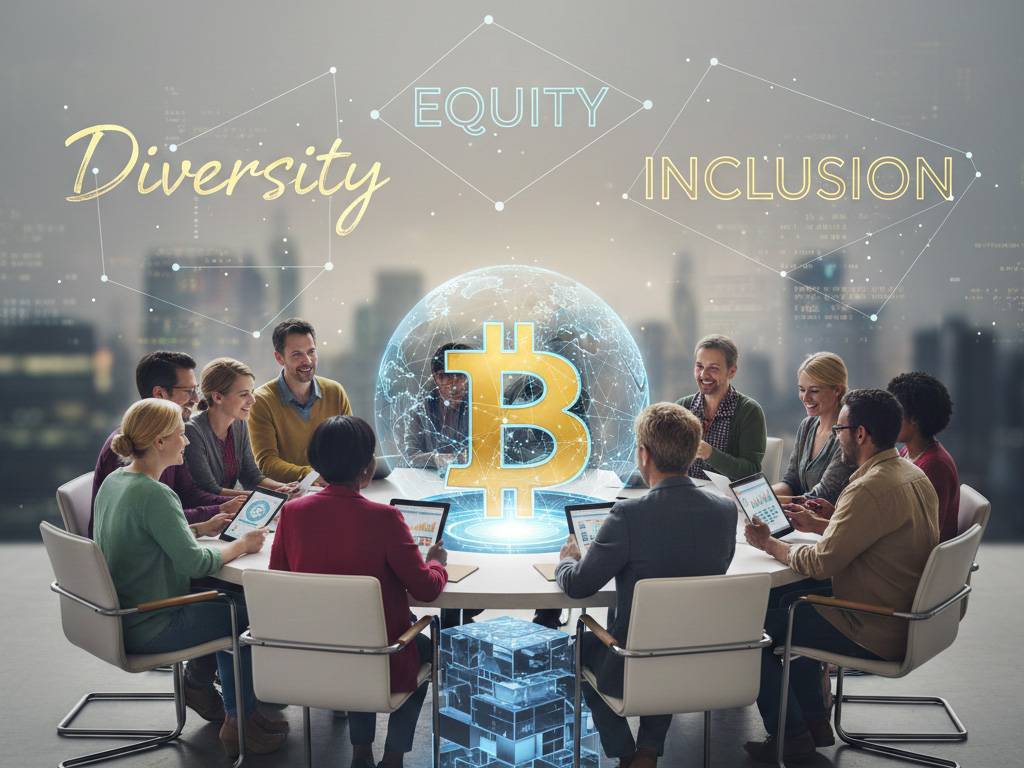
“A DEI-friendly program is characterized by a systemic integration of diversity, equity, and inclusion into its core operations, rather than treating them as optional add-ons. It moves beyond “ticking boxes” to create an environment where all individuals feel genuinely valued and empowered to contribute.”
Bitcoin has travelled through many transformations. Beginning with its cyber-punk roots, progressing through laser eye risk takers and maturing into traditional financial products. But it is the next phase that really excites me. As individuals learn more about Bitcoin they will understand that it is the most DEI (diversity, equity and inclusion) technology that has existed. For the first time in history the peasant has the same access to money as the king.
I could travel down the history of money. But others have done the deep dive with extensive detail and articulated the progression of money better than I’d be able to manage in a quick article. If you are interested, Lyn Alden wrote The History of Money: Why Our Financial System is Failing Us and How to Make it Better. It is not by accident that many people who find their way to Bitcoin have struggled with the current financial system, or have worked with individuals that the current system has failed. All of my experiences, being a Peace Corps volunteer, an AmeriCorps volunteer and a school based occupational therapist, have propelled me time and time again to the idea that we need fair, just and accessible money.
While I’ll dodge the history of money, I will discuss the fallacies of our current financial system. The first misconception is that the money in your bank account is your money. Its corollary is the assumption that your house, if you have a mortgage, is your house. The bank has a legal right to freeze bank accounts. Don’t make a mortgage payment for a couple of months and you’ll find out that the bank actually owns your home.
The reasons that a bank may give to freeze an account are vague. Suspicious or unusual activity is top of the list. While I understand that the development of that policy was to prevent fraud, it hasn’t prevented it. Criminals bent on finding ways to steal money seem to always find a way. But it has thrown up road blocks for individuals attempting to manage their resources. I know an older woman, excited to support her son’s burgeoning company, sent 10,000 to his bank account to be invested. Multiple phone calls, in-person trips to the bank and weeks later the money finally showed up in his bank account.
In the current political climate the next reason scares me. Any agency, labelling someone a terrorist, can compel a bank to freeze an account. I have watched in horror as individuals, attempting to be allies to communities impacted by ICE, have been killed. It doesn’t seem like a reach to me that the Department of Homeland Security could start labeling all protestors as terrorists thus giving them the right to freeze bank accounts. The impact of this on the mid-term election would be devastating. Successful campaigns need financial support.
There are some people who don’t have a bank account. The number one reason being they don’t have enough money for an account. Again, the bank doesn’t have to provide a service. People who are unbanked are disproportionately POC. In 2023, 10.6% of Black households, 9.5% of Hispanic households and 12.2% of Native Americans and Alaska Native households were unbanked, compared to only 1.9% of White households. If you extend the view globally the number of unbanked citizens increases.
My husband was the first in our family to hear about Bitcoin and he was initially beyond skeptical. But he was introduced to Bitcoin along with a former Refugee who immediately saw the power it would have had in Refugee Camps where anyone who managed to secure any currency at all was in constant fear of having it stolen from them. Some refugees took to storing value on prepaid cellphones by overpaying their bill and then transferring those credits to merchants as a form of payment. This was essentially the genesis of M-Peza, an early form of East African electronic money. But Safaricom ultimately controlled those credits. Tthe cellphone owner relied on them to “make good” on them and Safaricom has repeatedly suspended Euro based payments, effectively closing off transfers from family abroad.
While I won’t delve into the history of money, a key takeaway is money is a ledger keeping track of who has stored value. In our system we used cash for a long time. I know I’m showing my age with that statement. I used to take a 20 dollar bill to go see a movie and buy popcorn. When I began using online banking to pay bills and send money via Zelle to my kids, I envisioned dollar bills travelling across the internet super highway. I realize now the physical cash in my hand was an illusion. It was a symbolic representation of a debt I was owed. I deserved to get 20 dollars worth of stuff or services. In the case in 1983, my debt bought a movie and a box of popcorn. Bitcoin keeps a ledger that is supported by democracy and energy.
That is what differentiates Bitcoin from other cryptocurrencies. Bitcoin is an open ledger. When people talk about AI stealing Bitcoin, it makes me giggle. It’s like sneaking in answers to an open book test. Bitcoin is open source. The white paper is available online free to be read by anyone. Anyone can be a part of the system. Bitcoin isn’t a company, government or a group of shadowy super coders maintaining the ledger. Anyone can be a developer. As such, there is no authority that can confiscate your money.
Unlike the traditional banking system, Bitcoin technology encourages inclusion and understanding. Perhaps the most beautiful part of this technology is community. I know most liberals and progressives may be shocked by that statement assuming that Bitcoiners are selfish and hateful. But that couldn’t be further from the truth. Perhaps that is the biggest misconception. Bitcoiners tend to be curious and willing to look at something differently and eager to share their knowledge. Investors in cryptocurrencies are not Bitcoiners. That is also a misconception that plagues the Bitcoin industry. How can you tell? Bitcoiners are communities using circular economies in Africa and advocating for human rights as part of the Human Rights Foundation. Cryptocurrencies focus on the blockchain as a part of the current financial system and are generally developed and run by white men. Are some people involved with cryptocurrencies also involved in Bitcoin? Yes. But Bitcoiners are not supporters of cryptocurrencies. I’m clearly not a Bitcoin bro, although that frequently is the irrational attack of a Bitcoin only stance.
I don’t expect, nor want you to trust without verification. Access to Bitcoin is easy and inexpensive. If you don’t have a bank account, a cold storage wallet is less than a hundred dollars. Learning how to use one of these devices is free through videos or attending a Bitcoin meet-up in your area. If that price is too high, you can do research and probably find a cheaper way to go. If you have access to a bank account, downloading an app like Strike is free. This is how I started. My first “investment” into Bitcoin was two dollars into a Strike app. You can easily move Bitcoin into a cold storage wallet at any time.
Michael Saylor gets a lot of press as a Bitcoiner. Of course he does, he’s a white man and has found a way to financialize Bitcoin. Charlene Fadirepo, another advocate of Bitcoin, will give you another perspective. “Bitcoin is the only decentralized cryptocurrency”, she states on the video Charlene Fadirepo joins BBC Africa to discuss her new book: The Bitcoin Leap! There are many more leaders. The book Twenty-One Women in Bitcoin by Becca Bratcher has interviews with only women knowledgeable in the industry. These women make the case for Bitcoin being a DEI technology.
Some people believe that the volatility is a deterrent. I understand. The reason my personal first purchase of Bitcoin was two dollars worth is simple. It’s all I felt I could lose. As my understanding has improved through reading, listening to podcasts and watching hours of Squawk on CNBC, I understand that our current financial system is volatile. Bitcoin is a reflection of that volatility. The way to manage the volatility is to look further out and gain a long term perspective. Like a pilot flying a plane is off course most of the time, but tends to land at the right airport eventually. Bitcoin also has a long term trajectory of gaining value as a deflationary currency.
I’m a firm believer in universal technology. I remember using Dragon Dictate, an old voice recognition software program, so children with profound physical disabilities could dictate their own work. The integration of voice recognition technology has been something I have marvelled at and applauded along the way. If we really want money and access to power to be available to everyone, we need Bitcoin. We need universal access to be able to save value, not only for ourselves but for our children and generations to come.
Please do the work. Read, watch, listen to learn more about Bitcoin. When you do you’ll see that Trump has lied about supporting Bitcoin. He poisoned the well to maintain power and control over our ability to have fair and just money. Enjoy the trip down the rabbit hole.
See you soon!

Christine has spent a lifetime working with people. As a school based occupational therapist she advocated for students with special needs. She supported children, women and the environment when she volunteered at the Women’s Resource Center, AmeriCorps and the Peace Corps. Now she serves as a board member of The Progressive Bitcoiner.
First listen with your heart, then speak with your actions.